MENU
-
Springtime Hope
This time last year I wrote my first Blog with the desire to entertain, brighten and perhaps to allow my readers to pause for thought. I began by describing the beauty of the South of France that was just awakening from a sleepy lockdown, where everyone felt joy at being alive, and to be finally…
-
Winter – A Writing Wonderland
November is always a bleak month with grey rain heralding All Saints Day, a sombre reminder of our own mortality. But then there is Guy Fawkes and Diwali and a surprise invitation to Awaz FM radio for an interview with Manjulika Singh on my children’s book, ‘Vikings and Skylarks on Cumbrae’. This gave me the…
-
Celtic Connections in the Cote D’Azur
It was a seething 34 degrees when we arrived in Marseilles at the beginning of September complete with kilt, sporran, sgian dhubh (plastic but still raised eyebrows at airport security), tartan sash and accessories. We had been asked to perform a traditionl Scottish country dance at a local theatre in the south of France as…
-
Belladrum! Inverness! Boogie!
Yes Sir, Belladrum Can Boogie Summer in Scotland couldn’t have been better this year with the outstanding Largs Viking Festival where I did some readings and fun activities for my children’s book ‘Vikings and Skylarks on Cumbrae’. The launch at the Garrison in Millport was so special with a flurry of friends and family dropping…
-
Millport a place of Gentle Pleasures
Millport on the Isle of Cumbrae recently featured in The Guardian as a place of gentle pleasures. Written by Peter Ross In the Guardian he described it as a place that “draws me back time and time again.” For me, Millport has much the same effect – it has drawn me back time and time…
-
Flowers and Fauna of Provence

Welcome to my first Blog, the aim of which is to entertain, brighten, and perhaps pause for thought. I am writing from Provence in France where I have spent the past month. Nature here is in its glory; flowers and fauna are breaking out everywhere: marguerites (daisies) coquelicots (wild poppies) and iris maritimes (seaside irises).…
-
How to Speak English – Rapidement
Le ‘Phénomène Friends’
La technologie à l'ère numérique a généralement rendu la vie tellement plus facile pour tous: l'information à portée de main, des tableaux compliqués élaborés en quelques secondes, et l'analyse de sang en quelques minutes plutôt qu’en jours. Ce ne sont là que quelques-uns des avantages. Nous savons que nous sommes au bord d'une révolution du renseignement, mais il y a des choses qui ne peuvent tout simplement pas être accélérées, n’est ce pas? Par exemple, apprendre une deuxieme langue. Peu importe à quel point la technologie peut traduire rapidement sur papier et audiovisuellement, elle ne peut pas encore programmer un individu à tenir une conversation intelligente dans une autre langue dans aucune situation sociale. Cela s'avère frustrant pour les jeunes, habitués à trouver des solutions instantanément et ne voulant pas s'imposer dans la dure peine d'apprendre une langue étrangère d'autrefois.

D'après ma propre expérience, même après plus de 10 ans à mémoriser les terminaisons verbales et le vocabulaire, j'étais resté stupéfaite lors d'une vraie conversation en français. Il m'a fallu trois mois d'immersion totale en France avant de pouvoir parler avec assurance. J'avais étudiée jusqu'à un niveau supérieur à l'école à Glasgow avant de partir dans le sud de la France pour travailler  comme fille au pair pendant l'été. J'étais stagiaire et, armée de mon dictionnaire anglais/français Collins Little Gem et de l'encouragement de mes collègues français à La Bonne Auberge dans le Park Circus de Glasgow, j'étais en mission pour parler couramment français. Pas de cursus universitaire pour moi, juste un isolement total avec une famille française dans un village du Xe siècle au cœur de la Provence.
Quand on m'a fait visiter leur maison et qu'on m'a attribué les tâches à accomplir, la rapidité de leur discours m'a terrifiée. J'ai hoché la tête et accepté tout. Ils auraient pu me demander de ramasser des escargots dans le jardin et de les cuisiner pour le déjeuner, et j'aurais accepté sans broncher. (C'etait une tâche que j'ai découvert plus tard été laissée à leur fille de 9 ans. Les escargots, sans coquilles, étaient mis dans un batteur à nourriture et mangés dans une « sauce tomates » au moins une fois par semaine).
Trois mois plus tard, je hochais encore la tête et acceptais tout, puis quelque chose a cliqué. Comme une clé magique ouvrant une porte, j'ai soudain commencé à parler français sans peur ni inhibition. Cela s'est produit un dimanche après-midi alors que je dînais en famille au restaurant (une tradition française j'ai appris que tout le monde faisait pour montrer que en France, tout le monde peut manger comme un roi.) Après quelques verres du meilleur vin provençal, j'ai découvert que je pouvais converser sans hésitation. L'alcool m'a bien sûr aidée, mais à partir de ce jour-la, je n’ y eu plus peur de faire des erreurs et j'ai gagné en confiance pour poser des questions afin de clarifier le sens.

Depuis, j'ai pris des cours de conversation, regardée beaucoup de films français et je discute régulièrement avec des groupes de francophones. Il est important de continuer à pratiquer, mais je suis constamment impressionnée par la variété d'Apps, de You Tubers et d'Instagrammers, qui promettent de proposer des stratégies d'apprentissage des langues avec des résultats instantanés. À mon avis, ce n'est pas possible.
Récemment, après un concert de musique classique dans la ville française de Bandol sur la Côte d'Azur, j'ai parlé à un jeune clarinettiste primé, Joë Christophe, originaire de Paris. Non seulement il voulait parler anglais, mais bien sûr, il voulait venir jouer en Écosse. Je lui ai demandé quel était son secret pour parler un si bon anglais.

« J'ai étudié l'anglais à l'école jusqu'à l'âge de 18 ans, puis j'ai obtenu une place au Conservatoire de Paris pour étudier la clarinette. Tous les cours au Conservatoire étaient en français. Je trouvais cela fou en voyant des étudiants internationaux, venus de Chine, du Japon et d'ailleurs, tous anglophones, lutter pour communiquer en français. Cela s'ajoutait aux pièces musicales qu'ils étudiaient. C'était tellement difficile pour eux.
	« Dès que diplômé, on m'a immédiatement demandé de jouer dans des concerts partout dans le monde et la première chose que j'ai remarquée, c'est que tout le monde parlait anglais. C'était à ma grande honte et embarras que je ne pouvais communiquer avec personne avant ou après les concerts ou dans aucune situation sociale, sauf s'ils étaient français. La langue mondiale, où que vous soyez, est l'anglais. J'étais tellement frustré que je devais agir rapidement pour y remédier.
       « J'ai cherché sur internet, et ce que j'ai trouvé le plus attrayant, c'était le 'Effet Friends’. En regardant 10 saisons de Friends, en anglais, d'abord avec des sous-titres en français, puis en anglais, on s'immerge peu à peu dans la langue et comme par magie, on peut converser. »

Cela m'a  étonnée. « Donc tu veux dire qu'en regardant  les series ‘Friends’ sur Netflix, tu deviens tellement absorbé par le langage et les situations que tout s'ancré dans le cerveau, et tu peux communiquer ? »
     « Absolument, ça te laisse confiant. Tu perds la peur d'être ridiculisé à cause de ta prononciation, et tu peux parler librement avec des phrases du quotidien. Les gens réagissent comme jamais auparavant. »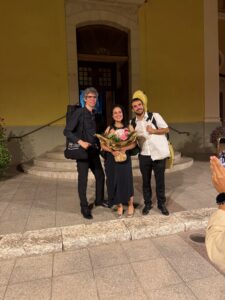
En effet, le ‘Phénomène Friends’ n'est pas nouveau. Le principal rappeur du boys band pop sud-coréen BTS, connu sous le nom de RM (Kim nan joon), a aussi appris ainsi, s'assurant que, dès la célébrité, il soit le principal anglophone du groupe lors d'interviews à travers les États-Unis. Il attribuait son talent à ‘Friends’ et à sa mère qui insistait pour qu'il regarde les 10 saisons. Mais peut-être que ce n'est pas seulement ‘Friends’. Je remarque aussi dans les supermarchés en France, où autrefois on n'entendait pas un mot d'anglais, il y a maintenant une tendance chez les employés à engager une conversation. De simples phrases comme « How are you?,  Have a good day, ou Where do you come from? »  Quand je leur demande où ils ont appris à parler anglais, ils répondent soit « Peppa Pig » soit « Friends ». Ils regardent les deux séries en anglais avec des sous-titres en français.

Grâce à Jennifer Anniston et à ses bonnes amies, elles ont offert la meilleure méthode d'apprentissage des langues étrangères de tous les temps! Oh, comme j'aurais aimée avoir des amis comme eux à l'époque où je serrais mon Collins Little Gem Dictionary si fort contre mon cœur.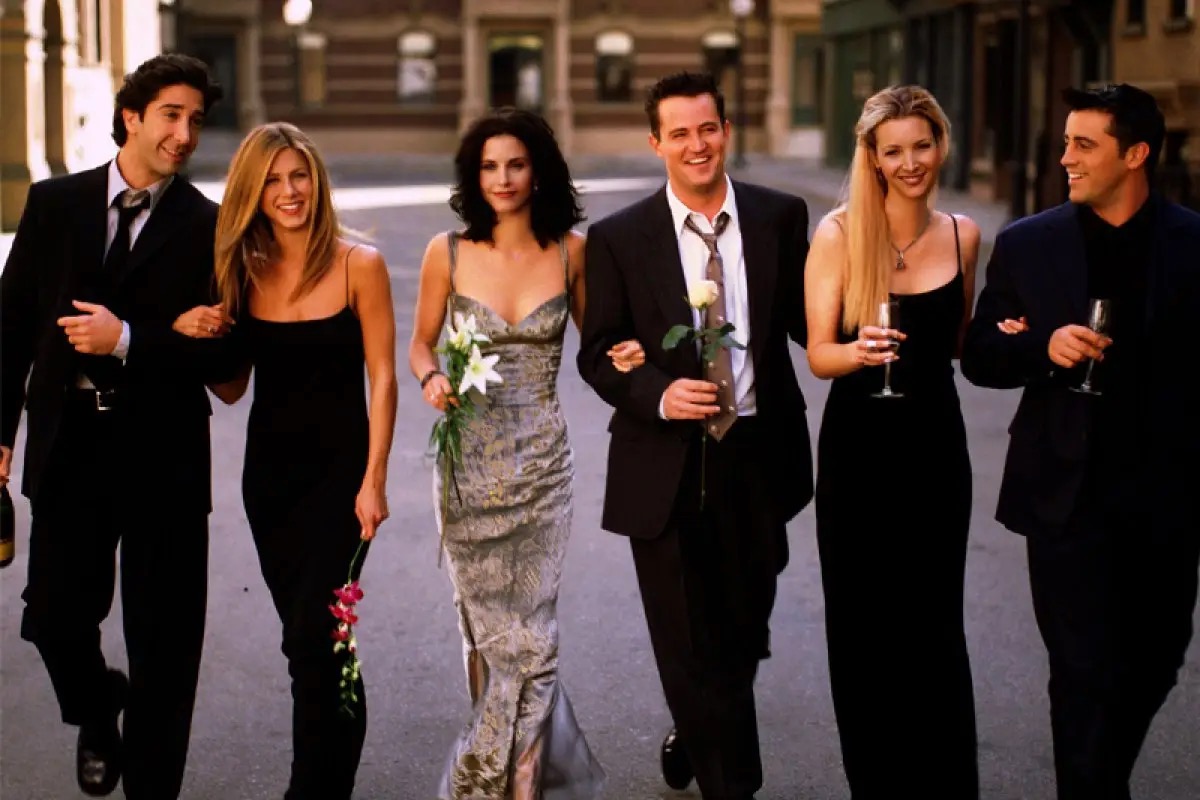
-
With a Little Help from my Friends
The Friends Effect
Technology in the digital era has generally made life so much easier for everyone: information at our fingertips, complicated spreadsheets drawn up in seconds, and blood test analysis in minutes rather than days. That’s just a few of the benefits. We know we are on the brink of an intelligence revolution, but there are some things that just can’t be speeded up, or can they?  For example, learning a second language. No matter how well technology can translate rapidly on paper, and audio-visually, it can’t yet programme an individual to hold an intelligent conversation in a second language in any social situation. This is proving frustrating for young people, used to finding solutions instantly and not willing to put in the hard slog of foreign language learning of yesteryear.

From my own experience, even with more than 10 years of memorising verb endings and vocabulary, I found that I was struck dumb when having an actual French conversation. It took three months of total immersion in France before I could speak confidently.  I had studied up to Higher level at school in Glasgow before venturing to the South of France to work as an au pair for the summer. I was a student teacher and armed with my Collins Little Gem English/French dictionary and the encouragement of my fellow French workers at La Bonne Auberge in Glasgow’s Park Circus, I was on a mission to speak French fluently. No university degree course for me, just total isolation with a French family in a 10th century village in the heart of Provence.
When I was first shown around their home, and allocated the tasks to be undertaken, the sheer rapidity of their speech terrified me.  I nodded and acquiesced to everything. They could have been asking me to collect snails from the garden and cook them for lunch, and I would have agreed without flinching.  (This was a task I later discovered was left to their 9-year-old daughter. The snails, with shells removed, were put in a food-mixer and eaten in a ‘sauce aux tomates’ at least once a week).

Three months later, I was still nodding and agreeing to everything, and then something clicked. Like a magic key opening a door, I suddenly began to speak French without fear or inhibition. It happened on a Sunday afternoon while dining out ‘en famille au restaurant’, (a French tradition, I learned everyone did to show that ‘en France tout le monde mange comme un roi’ – everyone can eat like a king.)  After a couple of glasses of the finest Provencal wine, I found I could converse without hesitation.  The liquor helped of course, but from that day on, I lost the fear of making mistakes and I gained confidence in asking questions to clarify meaning.

Since then, I have topped up with conversation classes, watched lots of French films and I regularly converse with groups of French speakers. Its important to keep practising, but I am constantly  amazed at the variety of Apps, You Tubers and Instagrammers, who promise to provide language learning strategies with instantaneous results. In my view, it cannot be done.
Recently, after a classical musical concert in the French town of Bandol on the Cote D’Azur, I spoke to a young award-winning clarinettist, Joë Christophe, from Paris. Not only was he keen to speak English, but of course, he wanted to come and play in Scotland. I asked him what his secret was for speaking such good English.
	“I studied English at school up to the age of 18 and then I gained a place at Le Conservatoire de Paris to study clarinet. All the classes at the Conservatoire were in French.  I felt this was crazy as I watched international students, from China, Japan and beyond, all English speakers, struggling to communicate in French. This was on top of the musical pieces they were studying. It was so difficult for them.
	“Once qualified, I was immediately asked to perform at concerts all over the world and the first thing I noticed was everyone spoke English. It was to my great shame and embarrassment, that I couldn’t communicate with anyone before or after concerts or in any social situation, unless they were French. The global language, no matter where you are, is English. I was so frustrated I had to do something to remedy this quick.
	“I looked on the internet, and what I found most appealing was the ‘Friends Effect’. By watching 10 seasons of Friends, in English, and at first with French subtitles, and later with English subtitles, you slowly become immersed in the language, and after 3 months, like magic, you can converse.”
This amazed me.  “So you mean by watching three months’ worth of Friends on Netflix, you become so absorbed in the language and situations, that it becomes embedded in the brain, and you can communicate?”
	“Absolutely, it leaves you feeling confident. You lose the fear of being laughed at for your pronunciation, and you can speak freely with everyday phrases. People respond like never before.”
Indeed the Friends phenomenon is not new. The main rapper of the South Korean pop boy band, BTS, known as RM (Kim nan joon) famously learned this way too, ensuring when fame struck that he was the main English speaker for the group in interviews all over the United States. He attributed his skill to Friends and his mother insisting he watched all 10 series. But perhaps it’s not just Friends. I notice too in the supermarkets in France, when once you wouldn’t hear a word of English spoken there is now a tendency for those working at the tills to start a conversation. Just simple little phrases like “How are you doing? Have a good day, or where do you come from?” When I ask where they learned to speak English, they either say, “Peppa Pig” or “Friends”. Both watched in English with French subtitles.
Courtesy of Jennifer Anniston and her ‘belles amis’, they have provided the best global second language learning tool of all time! Oh how I wish I had had friends like these back in the day when I clutched my Collins Little Gem Dictionary so close to my heart.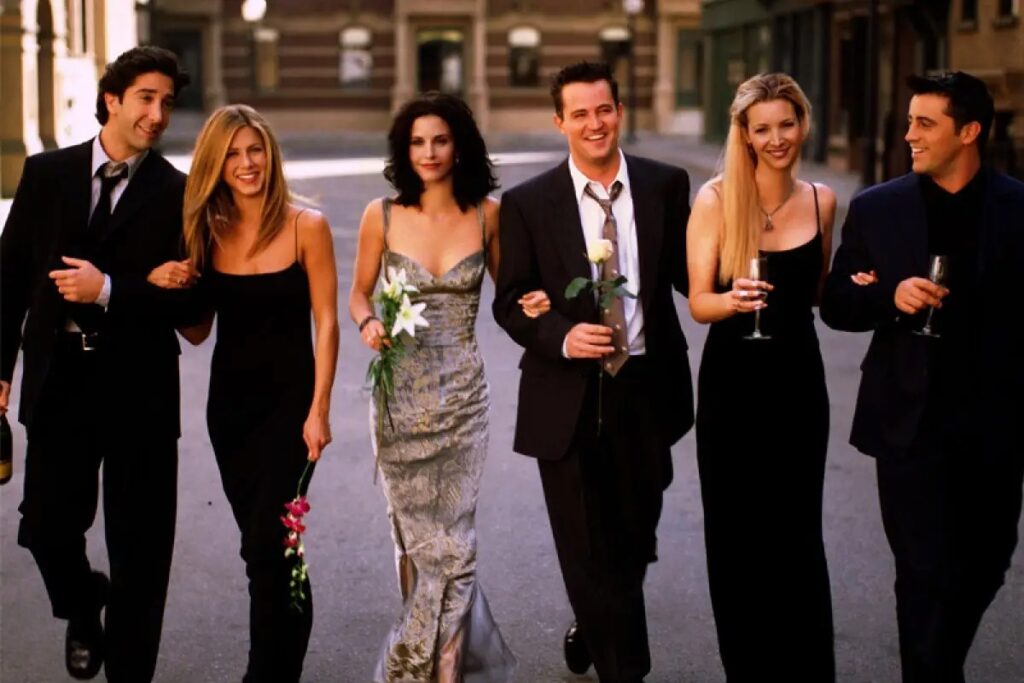
-
GLASGOW’S GOVAN STONES
Visit with grandchildren
It’s that time of year again when grandparents come in handy. They can be seen at sports centres, playgrounds and museums and are usually internally marking time. “That’s Week 1 over.” On the other hand, they know it’s one of life’s greatest pleasures to be healthy enough to spend summer holidays with the grandchildren. It’s a ‘rite of passage’ kind of thing.


It’s even better when grandchildren can teach you things. On a recent visit to the Govan Stones Church in Glasgow, my 9-year-old grandson pulled me literally away from the Govan Road entrance towards the humungous Govan/Partick Pedestrian Bridge that spans the River Clyde. We walked across the magnificent bridge, and looking upwards towards the soaring masts he told me about the Glasgow engineers that designed and built it, and how they had preserved the original iron pulleys that had drawn the ferries by huge chains back and forth across the river in days of yore. His dad had told him all about this. I was impressed. Now, in 2026, it was wonderful to see joggers, cyclists and wheelchair users making their way across the bridge, into the heart of Glasgow’s west end, by way of the Transport Museum.

But it was the Govan Stones we had come to see, and I was keen to follow the Clyde walkway trail that would lead to this quiet, quaint, historically rich place of repose. Tucked away amongst medieval type buildings, 20th century shipyards, and the awe-inspiring 21st century pedestrian bridge, lies the picturesque church originally dedicated to St Constantine in the oldest churchyard in Scotland. It’s got a humble feel to it and information panels line the pathway as you approach.
They tell visitors that this is a sacred place where ancient Kings of Strathclyde were buried, and that no less than 6 churches have been built on the site over 1500 years. It feels silent and serene, like a place that time forgot. Indeed, situated only a stone’s throw from Fairfield’s shipyard, where the hard labour of riveters and welders once rang out, this teardrop shaped graveyard was left to sleep and become overgrown, a bit like the Sleeping Beauty fairytale. However, the wildflowers and fauna blossomed, and there is still a faint sweet smell of honey in the air, from the elder and lime trees with flowers laden with pollen that surround this sheltered treasure.
Inside there was an extremely warm welcome from the Museum Assistant and popular historian, Scott McMullen. An unusual Sun Stone stands at the entrance and is impressive in its size and carvings. A sun with four serpent-like creatures swirling around its centre form the top part of the stone, and below is the recognisable Celtic interlaced fret work.
	“This stone has most certainly been adapted from Pagan times, through to the Christian era and then by Vikings. It would have been a marker, a direction stone, telling travellers that they had reached a sacred site,” he explained. “The serpents were a symbol of redemption and are quite crudely worked when compared to other similar stones found in Iona and Islay.”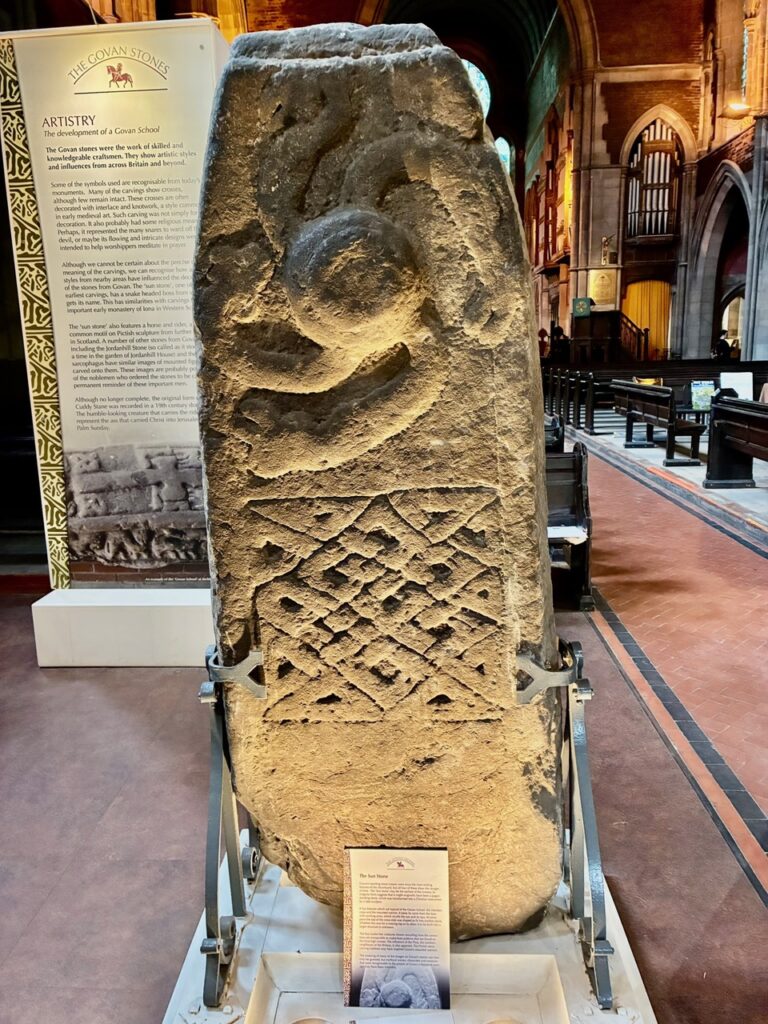
Many of the stones found in the Govan church are standing, but the most remarkable ones are the recumbent horizontal hog-backed collection.
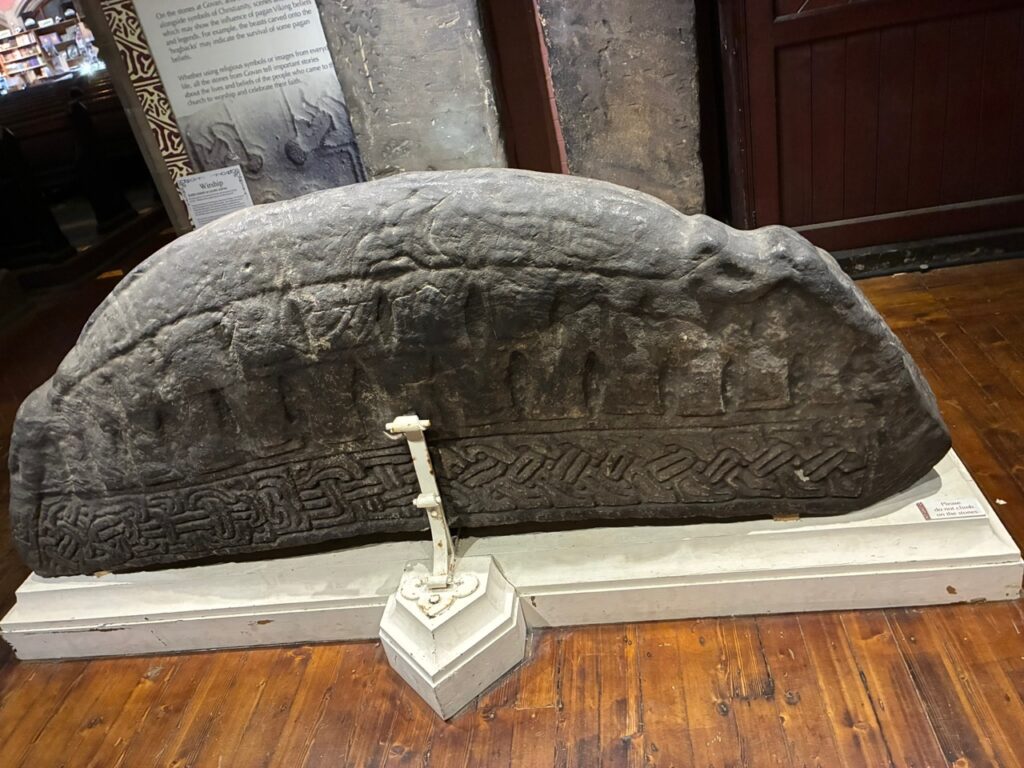
“These form the largest group found in Scotland and are physically larger and heavier than those found anywhere else in Britain,” Scott continues. “The five hump-backed stones on display had been hidden in a shipyard plating shed and uncovered by a fourteen-year-old schoolboy, working as part of a community archaeology and heritage programme. These stones would have originally been personal memorials designed to lie along the grave of distinguished people living in the area. What archaeologists and historians can’t say for sure is that the hogback stones indicate a Viking settlement, but perhaps its only time before we can say this for certain. The stones date to the 10th century, so they are clearly Viking in origin and combine the Celtic/Christian traditions with Norse mythology. They are made with one solid block of sandstone, and each are formed into the shape of an upturned Viking boat that would have once revealed a dragonhead carved on the ridge. Below the ridge, roof-tile shapes can still be seen. These represent home and hearth, so important to the Vikings, and finally, at the bottom, a border of highly decorative and intricate Celtic/Norse designs.”
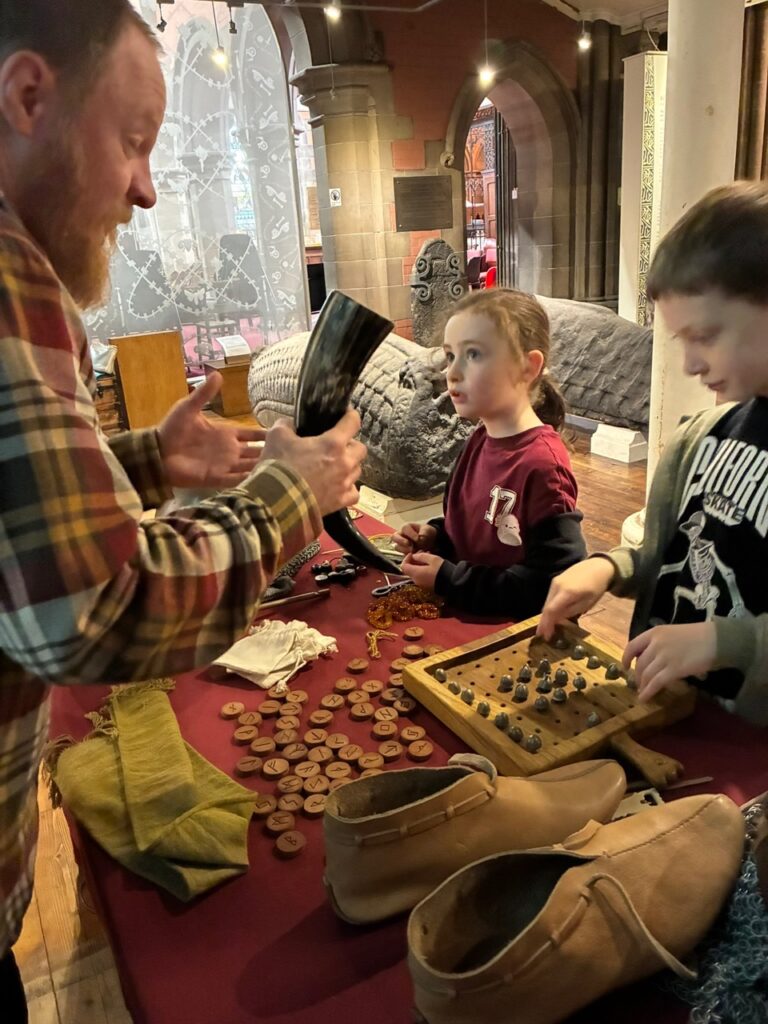
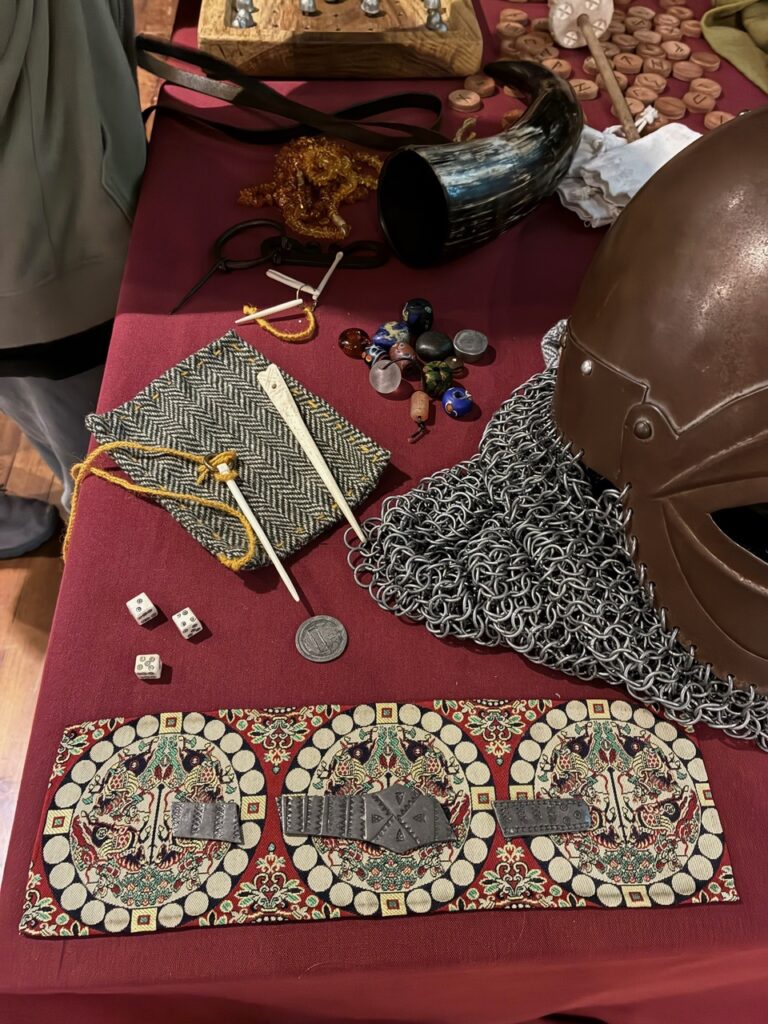
At the interest table for children there are a variety of objects: a silver hacking bracelet that Vikings used to ‘hack’ a piece off to pay for things, the large bone needles that were used to stitch fabrics, and the chainmail helmets, swords and shields. There is also a replica of a Viking strategy peg-board game, called Hnefatafl, and a shop that sells local crafted products.
“We are a grass roots organisation,” explained Scott, “we are growing every year. We are mainly staffed by volunteers and are run by the Govan Heritage Trust. We don’t come under any official museum status, therefore we don’t receive central funding. We have found that our Book Festival that runs through July and August and our annual programme of talks, presentations and musical evenings are becoming more popular, but with a venue size of 250 capacity and only one toilet, we are hampered by what we can do. However, recently, we linked with Govan Workspace Ltd who secured funding for a visitors’ centre that is currently being constructed at the side of the church. This will have toilet facilities and workspace for staff. It will make a huge difference to our events.”
This year’s summer programme will appeal to all ages and tastes with a Viking Games and Archaeological Open Day for children, a Glasgow Baron’s Music Festival with medieval chants and Bach cello excerpts, and a visit from the popular children’s author Louie Stowell of the Loki book series fame. Govan Stones has a vibrant social media presence, and tickets are available through Eventbrite.
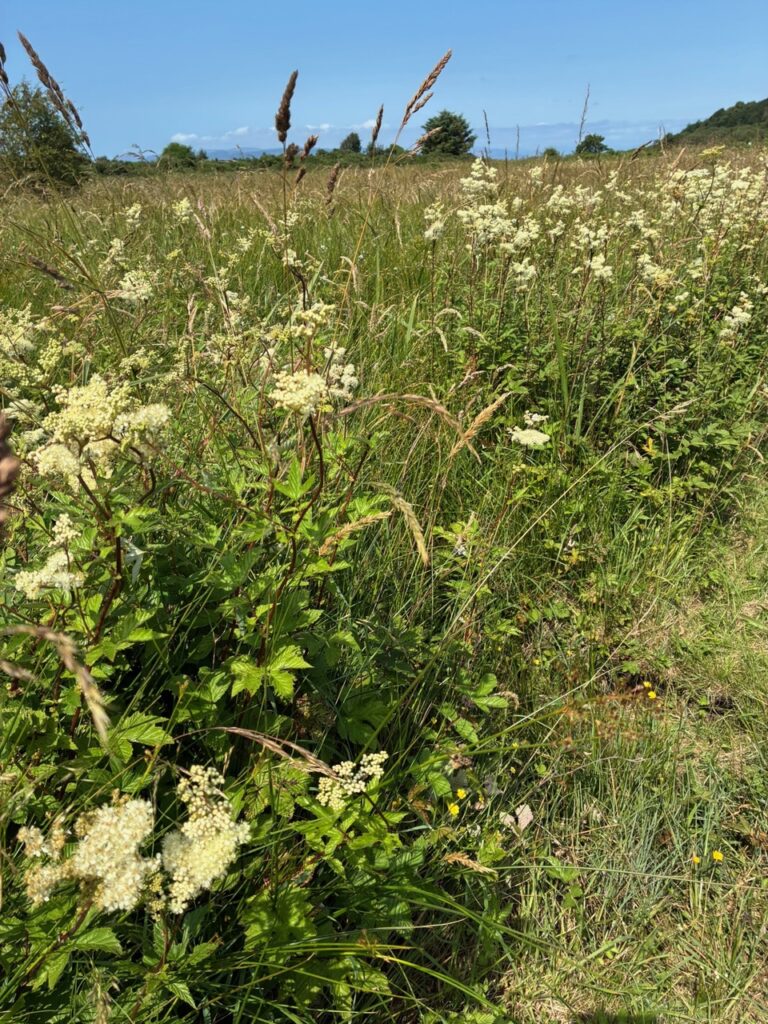
As we finished our tour, and browsed the wonderful collection of second-hand books, the grandparent in me was deeply grateful for the ‘no knobs, no buttons, no screens experience’ in this entirely app free zone. It felt quite special as we ambled down the Clyde walkway path leading to the river, leaving the musty olde world charm of the churchyard behind us. Here the wild geraniums were flourishing, the purple thistles were growing high, and the yellow meadowsweet scented the air. It held a timeless magical charm of where sacred lives had once lived and were now safely at rest.
Vikings and Skylarks on Cumbrae, is a story about Moranna, a Scots girl, who meets a Viking boy Sten, who lives on the island. They become friends, and share stories together, until the Battle of Largs in 1263 decides their fate. Richly illustrated and with fabulous reviews, purchase your copy now.
