MENU
-
GLASGOW’S GOVAN STONES
Visit with grandchildren It’s that time of year again when grandparents come in handy. They can be seen at sports centres, playgrounds and museums and are usually internally marking time. “That’s Week 1 over.” On the other hand, they know it’s one of life’s greatest pleasures to be healthy enough to spend summer holidays with…
-
L’Île de Bendor
Une Vrai Hommage à Paul Ricard L’île privée de Paul Ricard, « l’île de Bendor », située dans le sud de la France, est un lieu exclusif acquis par le magnat des spiritueux dans les années 1960, en hommage à ses modestes origines marseillaises. Sur cette petite île de 600 mètres sur 200 (et d’à…
-
L’Île Bendor
A homage to Paul Ricard Paul Ricard’s private island, ‘Île de Bendor’ in the South of France, is an exclusive island, bought by the millionaire drinks magnate in the 1960s, in homage to his humble Marseille roots. In this small island, not more than 1 mile in circumference, he built two hotels, an art gallery,…
-
On the Road to Damascus
An Unexpected Encounter WITH Pope leo xiv I had always been fascinated by the story of the three fountains that had sprung up on the site in Rome where St Paul was executed. Legend said that his head bounced three times and this was a symbol of the three times he was imprisoned and escaped.…
-
Best Reads 2025
Memoirs, Manuals and Fiction 2025 has been a busy year with downsizing to a new home, launching a new book, and editing and publishing another. There has still been time to read and reflect on cultural trends. The Wolf Hall series had just finished at the end of 2024, so it felt appropriate to read…
-
Shopping à La Francaise
Il est facile de se sentir comme une star de cinéma dans le sud de la France. Peut-être est-ce le soleil, la mer Méditerranée étincelante ou le port bordé de yachts magnifiques qui dégagent une bouffée de glamour sophistiqué. Pour les hommes d’un certain âge, tout ce qu’ils ont besoin de faire, c’est de lisser…
-
Shopping in the South of France
It’s easy to feel like a film star in the South of France. Perhaps it’s the sun, the sparkling Mediterranean Sea or the port lined with stunning yachts that give off a whiff of sophisticated glamour. For men of a certain age, all they need do is slick back their hair, stick on a pair…
-
Dressing Up for Belladrum Festival 2025
Belladrum It’s lovely to dress up for an occasion, and dress up for the Belladrum Festival the audience truly did! The theme of this year’s Tartan Hearts Festival was The Movies, well actually, ‘The Moovies’. At the ‘Bellawood’ Festival, the references to Highland Coos were everywhere. In fact, as soon as you crossed the Highland…
-
Scottish History Comes Alive
The Desperate Journey There isn’t a staffroom in the land where one teacher or another isn’t talking about writing a book. “Someone’s got to write this down!” they say as another incomprehensible policy is introduced. Or “I’ve spent so much time writing my own material for this novel-study or topic, it ought to be published!”…
-
Best Reads of 2024
I promised in 2024 to tear myself out of my ‘reading comfort zone’ of historical fiction and step into the literary world ‘beyond’. As the curtain falls on 2024, did I succumb to a new genre, or did I reach back for that good old comfort blanket? Dark Rising by Greig Beck, (Momentum) was recommended…
-
GLASGOW’S GOVAN STONES
Visit with grandchildren
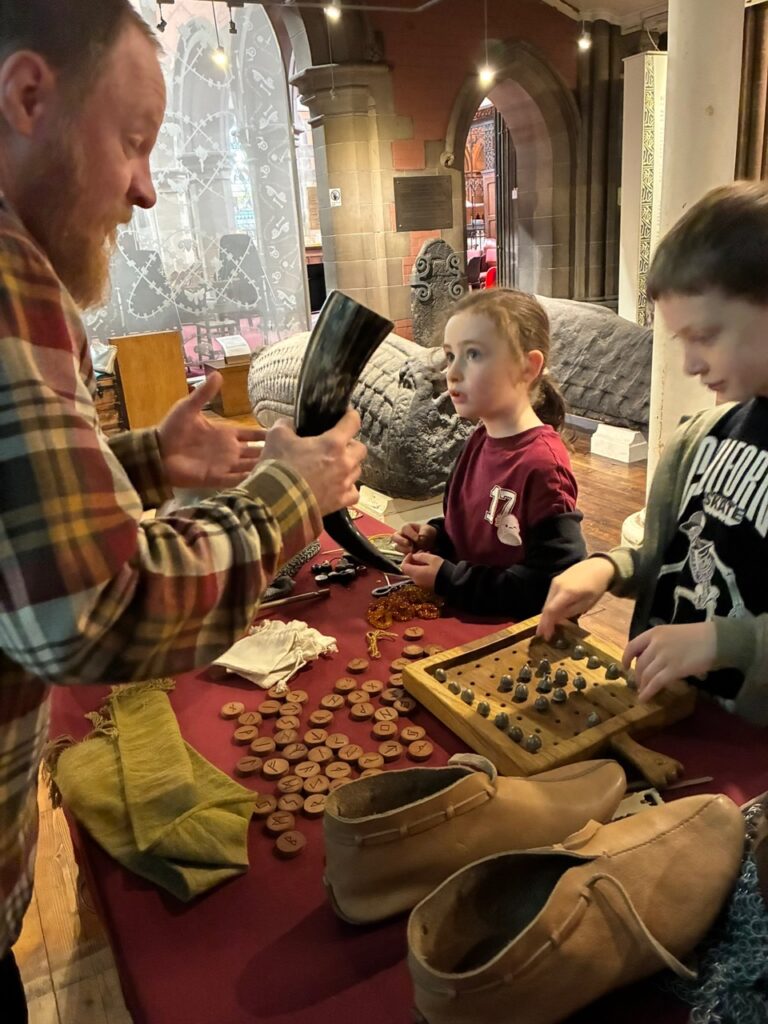
It’s that time of year again when grandparents come in handy. They can be seen at sports centres, playgrounds and museums and are usually internally marking time. “That’s Week 1 over.” On the other hand, they know it’s one of life’s greatest pleasures to be healthy enough to spend summer holidays with the grandchildren. It’s a ‘rite of passage’ kind of thing.
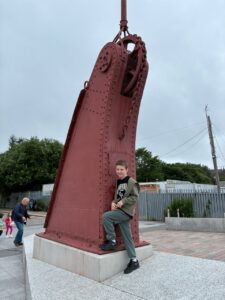

It’s even better when grandchildren can teach you things. On a recent visit to the Govan Stones Church in Glasgow, my 9-year-old grandson pulled me literally away from the Govan Road entrance towards the humungous Govan/Partick Pedestrian Bridge that spans the River Clyde. We walked across the magnificent bridge, and looking upwards towards the soaring masts he told me about the Glasgow engineers that designed and built it, and how they had preserved the original iron pulleys that had drawn the ferries by huge chains back and forth across the river in days of yore. His dad had told him all about this. I was impressed. Now, in 2026, it was wonderful to see joggers, cyclists and wheelchair users making their way across the bridge, into the heart of Glasgow’s west end, by way of the Transport Museum.

But it was the Govan Stones we had come to see, and I was keen to follow the Clyde walkway trail that would lead to this quiet, quaint, historically rich place of repose. Tucked away amongst medieval type buildings, 20th century shipyards, and the awe-inspiring 21st century pedestrian bridge, lies the picturesque church originally dedicated to St Constantine in the oldest churchyard in Scotland. It’s got a humble feel to it and information panels line the pathway as you approach.
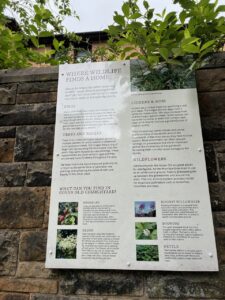
They tell visitors that this is a sacred place where ancient Kings of Strathclyde were buried, and that no less than 6 churches have been built on the site over 1500 years. It feels silent and serene, like a place that time forgot. Indeed, situated only a stone’s throw from Fairfield’s shipyard, where the hard labour of riveters and welders once rang out, this teardrop shaped graveyard was left to sleep and become overgrown, a bit like the Sleeping Beauty fairytale. However, the wildflowers and fauna blossomed, and there is still a faint sweet smell of honey in the air, from the elder and lime trees with flowers laden with pollen that surround this sheltered treasure.
Inside there was an extremely warm welcome from the Museum Assistant and popular historian, Scott McMullen. An unusual Sun Stone stands at the entrance and is impressive in its size and carvings. A sun with four serpent-like creatures swirling around its centre form the top part of the stone, and below is the recognisable Celtic interlaced fret work.
	“This stone has most certainly been adapted from Pagan times, through to the Christian era and then by Vikings. It would have been a marker, a direction stone, telling travellers that they had reached a sacred site,” he explained. “The serpents were a symbol of redemption and are quite crudely worked when compared to other similar stones found in Iona and Islay.”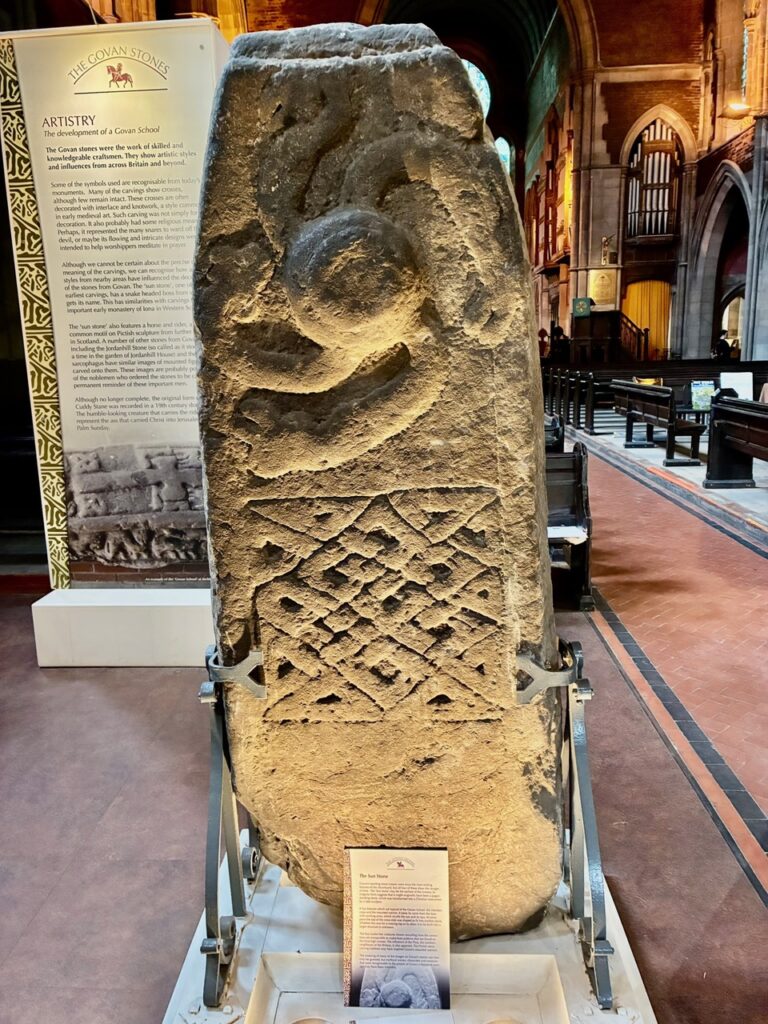
Many of the stones found in the Govan church are standing, but the most remarkable ones are the recumbent horizontal hog-backed collection.
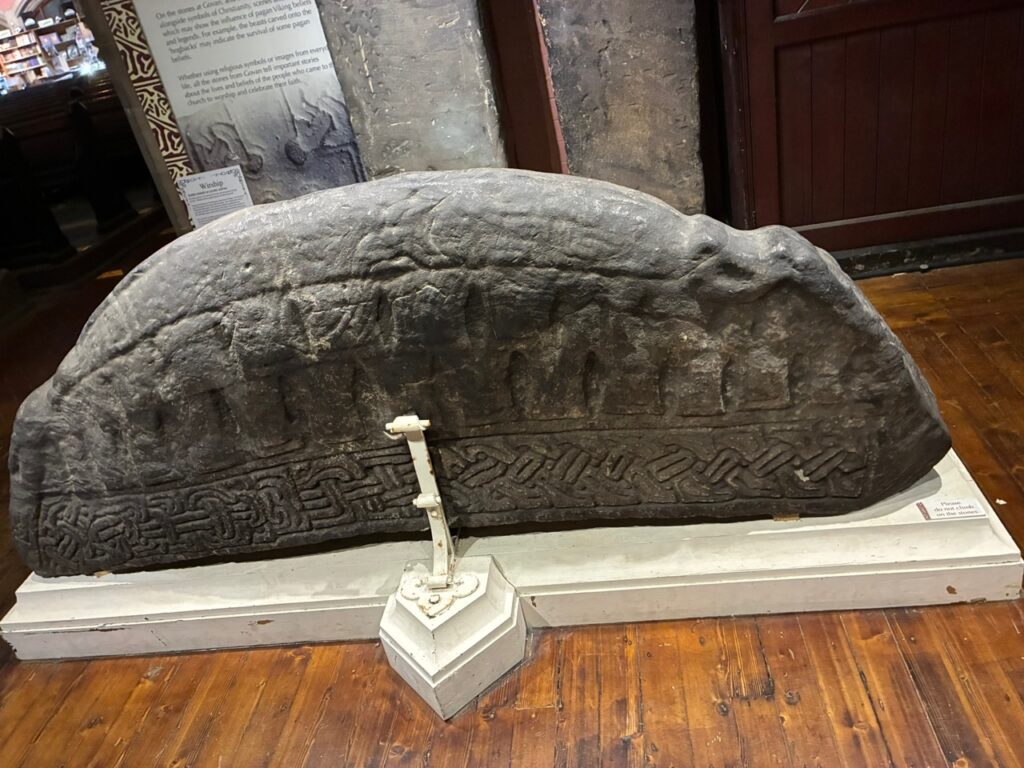
“These form the largest group found in Scotland and are physically larger and heavier than those found anywhere else in Britain,” Scott continues. “The five hump-backed stones on display had been hidden in a shipyard plating shed and uncovered by a fourteen-year-old schoolboy, working as part of a community archaeology and heritage programme. These stones would have originally been personal memorials designed to lie along the grave of distinguished people living in the area. What archaeologists and historians can’t say for sure is that the hogback stones indicate a Viking settlement, but perhaps its only time before we can say this for certain. The stones date to the 10th century, so they are clearly Viking in origin and combine the Celtic/Christian traditions with Norse mythology. They are made with one solid block of sandstone, and each are formed into the shape of an upturned Viking boat that would have once revealed a dragonhead carved on the ridge. Below the ridge, roof-tile shapes can still be seen. These represent home and hearth, so important to the Vikings, and finally, at the bottom, a border of highly decorative and intricate Celtic/Norse designs.”
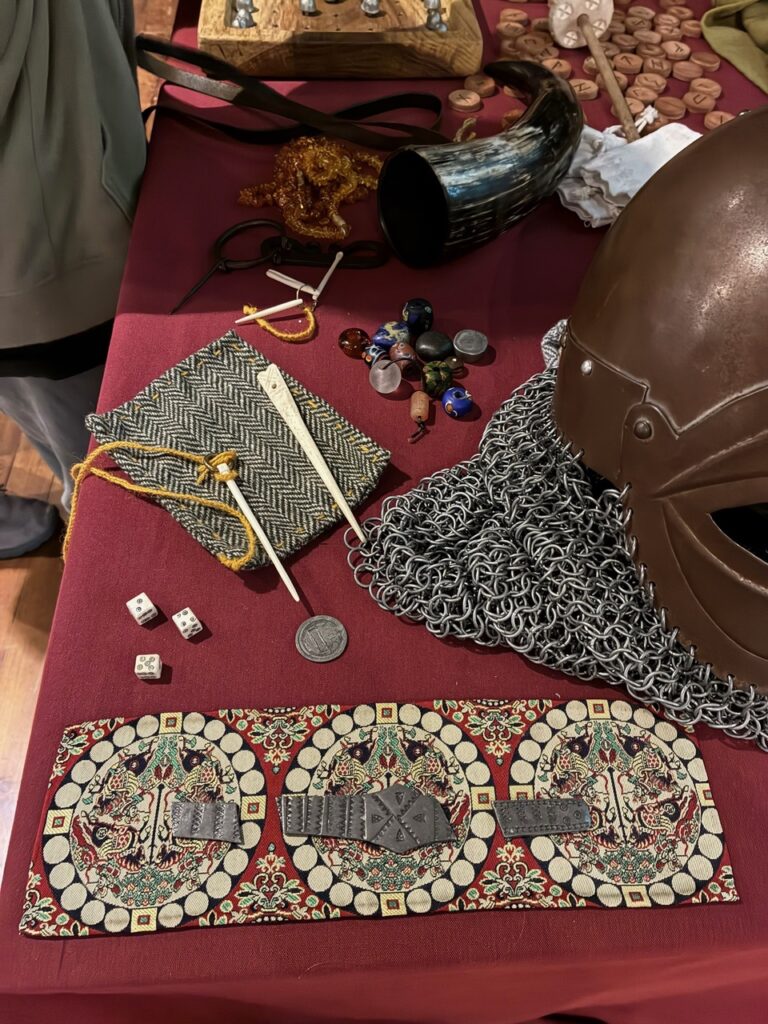
At the interest table for children there are a variety of objects: a silver hacking bracelet that Vikings used to ‘hack’ a piece off to pay for things, the large bone needles that were used to stitch fabrics, and the chainmail helmets, swords and shields. There is also a replica of a Viking strategy peg-board game, called Hnefatafl, and a shop that sells local crafted products.
“We are a grass roots organisation,” explained Scott, “we are growing every year. We are mainly staffed by volunteers and are run by the Govan Heritage Trust. We don’t come under any official museum status, therefore we don’t receive central funding. We have found that our Book Festival that runs through July and August and our annual programme of talks, presentations and musical evenings are becoming more popular, but with a venue size of 250 capacity and only one toilet, we are hampered by what we can do. However, recently, we linked with Govan Workspace Ltd who secured funding for a visitors’ centre that is currently being constructed at the side of the church. This will have toilet facilities and workspace for staff. It will make a huge difference to our events.”
This year’s summer programme will appeal to all ages and tastes with a Viking Games and Archaeological Open Day for children, a Glasgow Baron’s Music Festival with medieval chants and Bach cello excerpts, and a visit from the popular children’s author Louie Stowell of the Loki book series fame. Govan Stones has a vibrant social media presence, and tickets are available through Eventbrite.
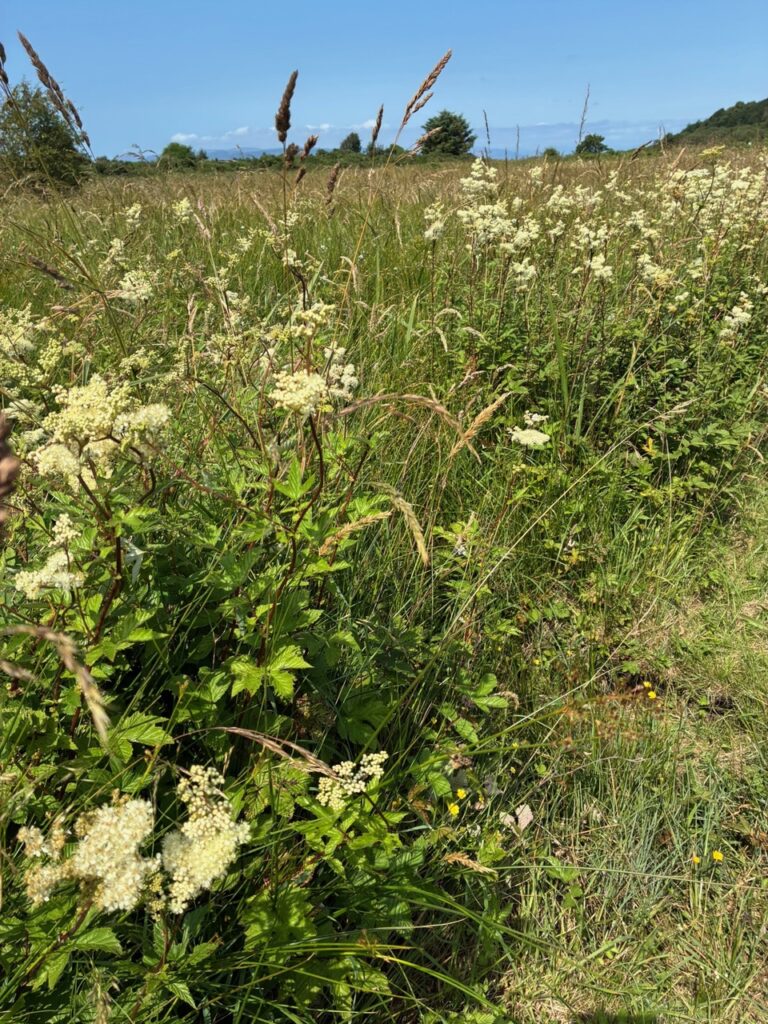
As we finished our tour, and browsed the wonderful collection of second-hand books, the grandparent in me was deeply grateful for the ‘no knobs, no buttons, no screens experience’ in this entirely app free zone. It felt quite special as we ambled down the Clyde walkway path leading to the river, leaving the musty olde world charm of the churchyard behind us. Here the wild geraniums were flourishing, the purple thistles were growing high, and the yellow meadowsweet scented the air. It held a timeless magical charm of where sacred lives had once lived and were now safely at rest.
Vikings and Skylarks on Cumbrae, is a story about Moranna, a Scots girl, who meets a Viking boy Sten, who lives on the island. They become friends, and share stories together, until the Battle of Largs in 1263 decides their fate. Richly illustrated and with fabulous reviews, purchase your copy now.

-
L’Île de Bendor
Une Vrai Hommage à Paul Ricard

L’île privée de Paul Ricard, « l’île de Bendor », située dans le sud de la France, est un lieu exclusif acquis par le magnat des spiritueux dans les années 1960, en hommage à ses modestes origines marseillaises. Sur cette petite île de 600 mètres sur 200 (et d’à peine 1,6 km de circonférence), il fit construire deux hôtels, une galerie d’art, un petit port de pêche et y dissémina des statues témoignant de son amour pour l’art et la Méditerranée. Sa devise était « on n’a rien sans rien » et, dans le passé prestigieux de l’île, il accueillit des hôtes de marque tels que Salvador Dalí, Marcel Pagnol et Joséphine Baker.

Ricard, fils de négociant en vins, grandit au cœur des collines marseillaises, émerveillé par la beauté du paysage : la mer d'un bleu profond et les criques abritées, les effluves de romarin, de lavande et de pin, et bien sûr, les fleurs jaune vif d'absinthe et de fenouil. Il pressentait instinctivement le potentiel de ces herbes aromatiques. À partir d'un mélange d'anis, de réglisse et d'herbes, il créa un apéritif abordable (qui fut d'ailleurs interdit en France pendant la Première Guerre mondiale pour avoir provoqué folie et hallucinations) et le baptisa Pastis Paul Ricard. C'était dans les années 1930. Servi avec de l'eau, puis des glaçons, ce pastis à la robe jaune laiteuse connut un succès fulgurant. Ancien étudiant en art, Paul Ricard dessina le logo et choisit les couleurs de la marque, le jaune et le bleu, aussi éclatantes que la fleur d'absinthe sur fond de bleu profond de la Méditerranée.
Sa fortune faite, il passa les dernières années de sa vie en famille sur l’île de Bendor, où il renoua avec sa première passion, la peinture. Il créa une galerie d’art pour exposer ses portraits de famille et se consacra à sa seconde passion, le sport automobile, en fondant le circuit Paul Ricard à Le Castellet, ville proche de Marseille, qui accueille encore aujourd’hui des compétitions. À la mort de Ricard, à 88 ans, l’île de Bendor était devenue un lieu de prédilection pour les riches et les célébrités. Dans la discrète ville de Bandol, il était courant d’apercevoir ces personnalités arrivant au port dans leurs limousines aux vitres teintées pour se rendre aux soirées privées ou aux conférences internationales organisées sur l’île. Colleen Hoover, auteure à succès du New York Times, fut l’une de ces invitées de marque et, comme elle le déclara elle-même, elle « vivait un rêve ».

Cependant, au XXIe siècle, l'île nécessitait une rénovation. En 2021, Marc de Jouffroy, arrière-petit-fils de Paul Ricard, annonça, au nom des administrateurs, son intention de la moderniser dans une optique écoresponsable, avec la volonté de s'adresser non seulement aux plus fortunés, mais aussi à tous. En mai 2026, elle ouvrit officiellement ses portes et, lors d'une récente visite, je l'ai trouvée toujours aussi charmante qu'il y a quinze ans, lors de ma première visite.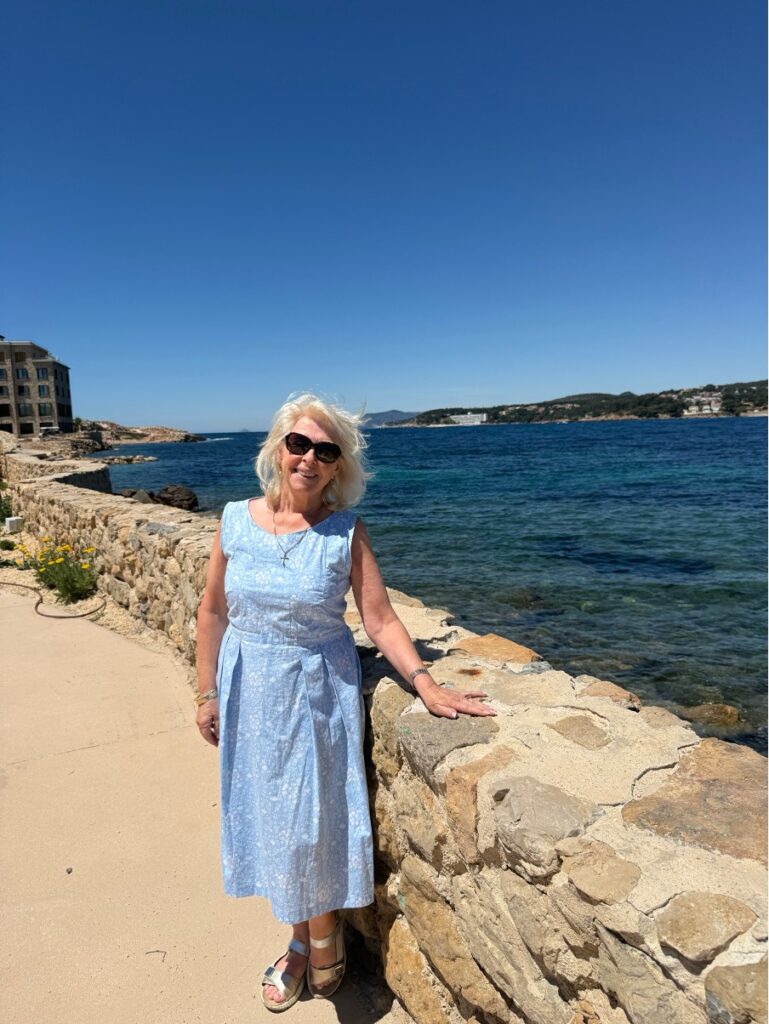
J'ai embarqué à bord du ferry flambant neuf, entièrement électrique et arborant le logo Paul Ricard, pour une traversée de sept minutes. À l'approche du port de pêche, la rangée de maisons miniatures aux couleurs de l'arc-en-ciel dégage une atmosphère accueillante. Le personnel, jeune et bronzé, est vêtu de la tête aux pieds en Ralph Lauren : blazers bleu marine, chemises blanches et pantalons taupe à pinces. Certains accueillent les passagers à pied ; d'autres sillonnent l'île en voiturettes électriques, livrant des produits de première nécessité. On m'a servi un délicieux café crème accompagné d'un croissant tout juste sorti du four et d'un bol de noix. L'atmosphère me rappelait un peu Portmeirion, au Pays de Galles : calme, paisible et presque irréel. La galerie d'art présentait quelques grandes installations, destinées, je le soupçonnais, à une clientèle fortunée. Un espace extérieur aménagé à l'intérieur de la galerie était en pierre et orné de feuilles d'or. Une grande œuvre textile, suspendue au plafond, représentait un soleil doré sur un fond de lin peint en bleu. Des vases et des bols en céramique aux formes courbes étaient exposés, créés par une artiste croate en résidence sur l'île. Elle était chaleureuse et s'inspirait de la Méditerranée, mais de sa rive orientale : l'Adriatique.

Le restaurant provençal, ombragé par des toiles de jute, était animé. À l'intérieur, une cuisine ouverte laissait entrevoir les chefs étoilés Michelin s'affairant au milieu des vapeurs et des crépitements des plats qu'ils préparaient. De véritables œuvres d'art culinaires, j'imagine, inspirées, bien sûr, par la mer.

Je me dirigeai vers l'hôtel de 90 chambres situé à l'ouest de l'île. Son architecture brutaliste contraste fortement avec les douces nuances provençales du reste de l'île, mais l'artiste qui sommeille en Paul Ricard aurait sans doute approuvé la préservation de sa structure. L'intérieur a été élégamment restauré, mais je ne pus l'explorer davantage, l'accès étant interdit. « Interdit », me dit poliment la sécurité. Il en allait de même pour l'hôtel plus exclusif, le Delos, situé à l'ouest de l'île. Je choisis donc de flâner le long des sentiers côtiers embaumés par la nature, et c'est là que je découvris le véritable paradis insulaire de Paul Ricard.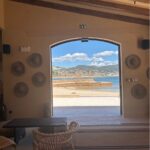
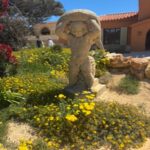
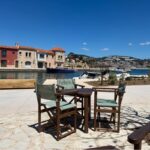
 Juste après la magnifique statue de Neptune, un chemin discret se dévoilait, avec des marches descendant vers la mer, bordées de rochers et d'arbustes méditerranéens sculptés par le vent. Il y avait de magnifiques absinthes jaunes (absinthe commune), des œillets d'Inde dorés et des marguerites roses. Le parfum des embruns marins, lorsque les vagues se fracassaient sur les rochers en contrebas, était magique. Ce sentiment d'évasion, qui est sans doute l'ingrédient secret de toute île, c'est ce que j'ai trouvé là, à l'autre bout de l'île, face à la mer. J'avais l'impression que Paul Ricard était véritablement présent dans ce cadre enchanteur, et l'île est un vrai hommage à son amour de l'art et de la Méditerranée.

Zannier Hotels
Bandol Tourisme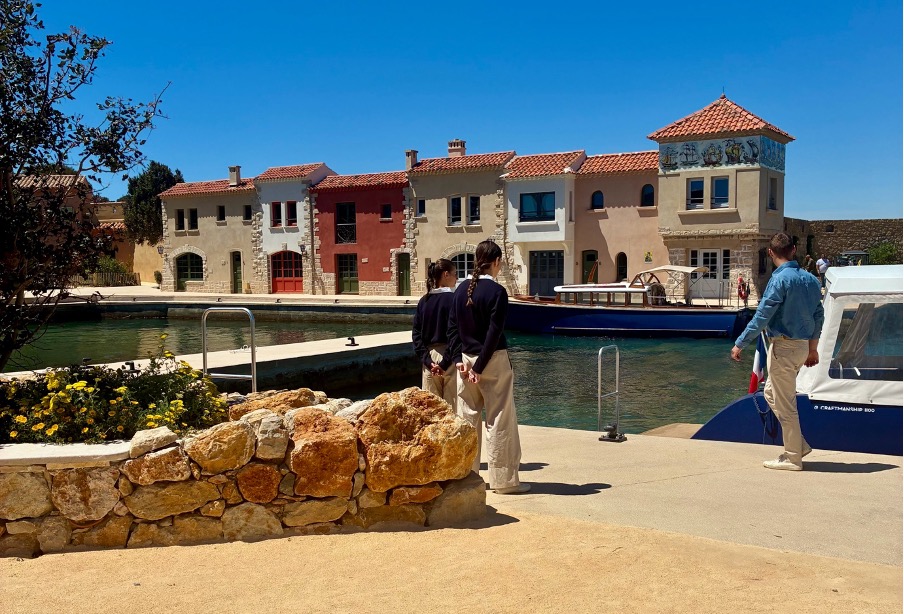
Link à Zannier Hotels -
L’Île Bendor
A homage to Paul Ricard
Paul Ricard’s private island, ‘Île de Bendor’ in the South of France, is an exclusive island, bought by the millionaire drinks magnate in the 1960s, in homage to his humble Marseille roots.  In this small island, not more than 1 mile in circumference, he built two hotels, an art gallery, a small fishermen’s port, and placed statues throughout that referenced his love of art and the Mediterranean Sea. His motto in life was, “no pain, no gain” and in the island’s heady past, he welcomed distinguished guests such as Salvador Dali, Marcel Pagnol and Josephine Baker.

Ricard, whose father was a wine merchant, grew up surrounded by the Marseille hills and he was in awe of the wonderful landscape: the deep blue sea and the sheltered coves, the scent of rosemary, lavender, pine in the air and, of course, the bright yellow flowers of absinthe and fennel.  He instinctively knew that in these fragrant herbs, there lay a fortune. Using a mixture of aniseed, liquorice and herbs, he created an affordable aperitif (incidentally once banned in France for causing madness and hallucinations during WW1) and christened it Paul Ricard’s Pastis. This was the 1930s, and served with water, then ice, it had a milky-yellowy glow, and it took the world by storm.  A former art student, Paul Ricard designed the logo using the colours of yellow and blue: as vibrant as the absinthe flower against the deep blue backdrop of the Mediterranean Sea.
His fortune made, he spent his later years of life with his family on the ‘île de Bendor’, where he returned to his first love of painting. He created an art gallery to display his portraits of family members and followed his second love for motor racing, by establishing the Paul Ricard circuit in Le Castellet, a town not far from Marseille, that still holds competitions today. By the time Ricard passed away aged 88, the island of Bendor had become a favourite of the rich and famous. In the discreet town of Bandol, it was usual to spot the ‘beautiful people’ arriving at the port in their blacked-out limos to be taken over to the island’s private parties or international conferences. The New York Times best-selling author Colleen Hoover was one distinguished guest and as she said of her visit, she was ‘living the dream’.
However, by the 21st century the island required a refurbishment, and in 2021, the great grandson of Paul Ricard, Marc de Jouffroy, announced his intention, on behalf of the trustees, to modernise it, with an eco-friendly dynamic, and a desire to cater for not just the super-rich, but everyday people too. In May 2026, it was officially opened for business, and on a recent visit, I found it equally as enchanting, as it had been when I first visited 15 years ago.I boarded the freshly painted ferry, fully electric, with Paul Ricard branding for the 7-minute trip. Approaching the fishing port, the miniature row of rainbow-coloured houses has a welcoming feel. The staff are young, bronzed and dressed head to toe in Ralph Lauren: navy blazers, white shirts and waist pleated taupe trousers. Some are there to greet foot passengers; others are whizzing about in electric buggies delivering essentials from one part of the island to the other. I was served a delicious ”café crème” coffee with a freshly baked croissant and a bowl of nuts. It felt a bit like Portmeirion in Wales: silent, still and surreal.
The art gallery had a couple of large installations, with a target audience, I suspected, being the super-rich. An outdoor seating area, displayed inside the gallery, was made of stone and decorated with gold leaf. A large textile art piece was suspended from the ceiling showing a gold leaf sun, on a backdrop of blue painted linen. Curved pottery vases and bowls were on display, created by a Croatian artist who had a residency on the island. She was friendly and inspired by the Mediterranean, only the eastern side: the Adriatic.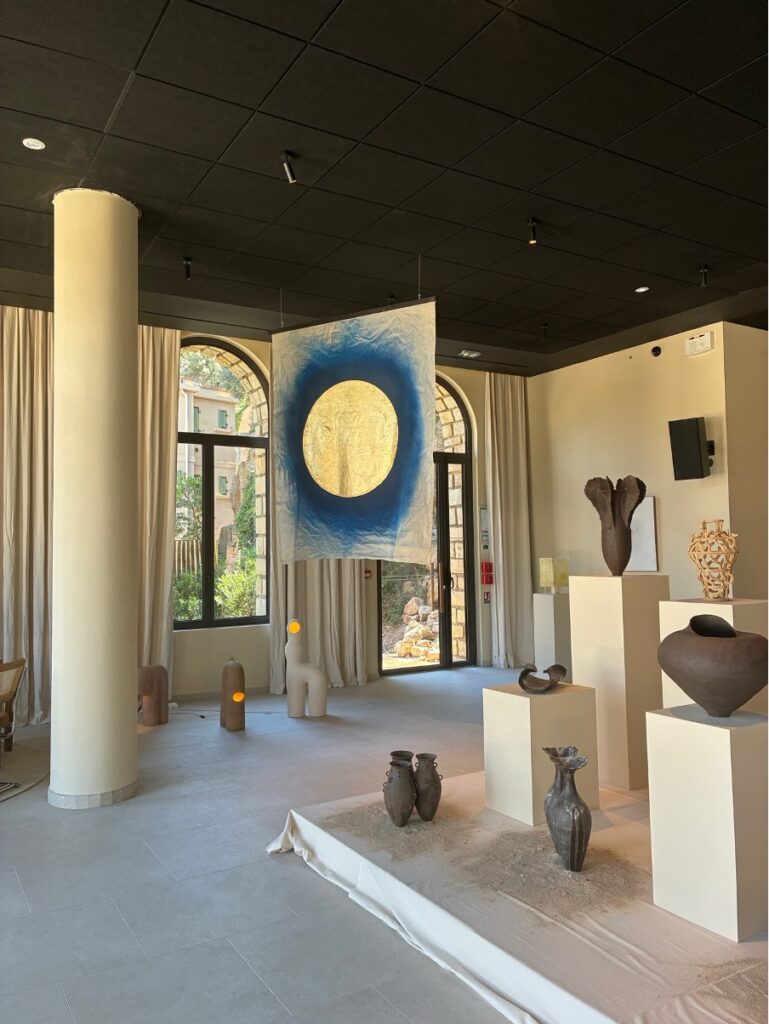
The Provencal style restaurant shaded by hessian canopies was busy. Inside, an open cuisine revealed the Michelin starred chefs working hard amongst the steam and sizzle of the dishes they were preparing. Culinary works of art I imagined, and of course, inspired by the sea.

I walked towards the 90 bedroomed hotel to the west of the island. Its brutalist design is in sharp contrast to the soft Provence style architecture elsewhere, but the artist in Paul Ricard would have approved that its distinctive structure has been retained. Inside it has been elegantly restored but I was unable to take a closer look, as it was out of bounds.  “Interdit” said security politely.  As was the hotel to the west of the island, the more exclusive boutique hotel named Delos. Instead, I took a walk along the nature scented coastal trails, and that’s where I found the true island paradise of Paul Ricard.
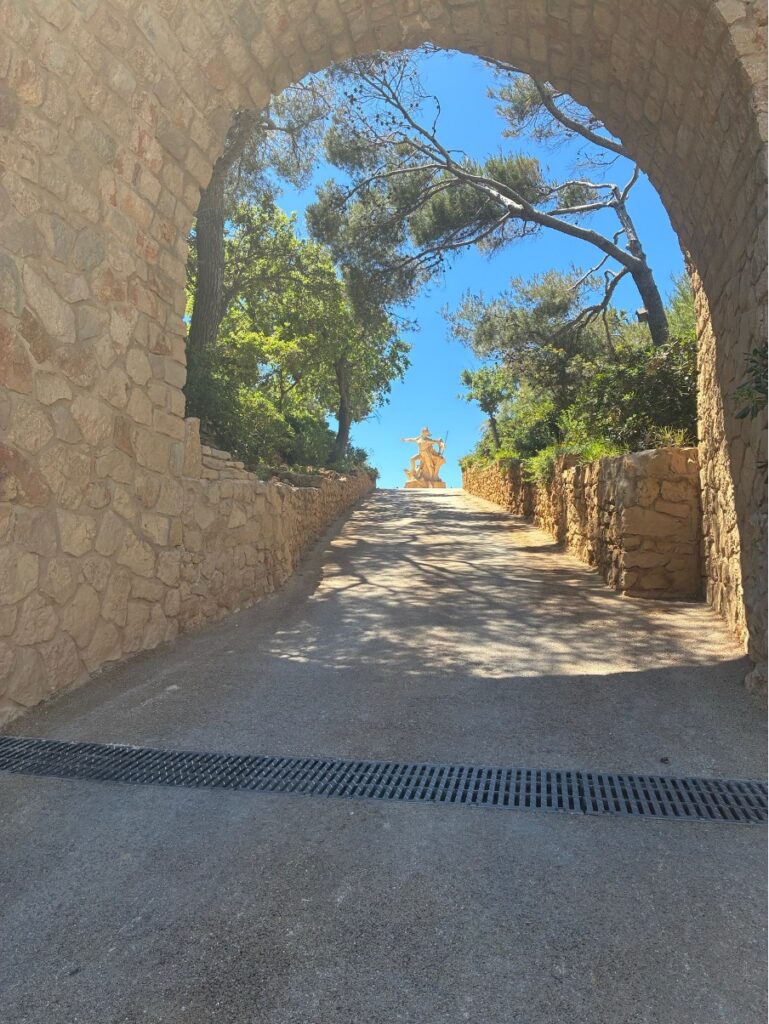
Just beyond the magnificent statue of Neptune, there lay a hidden path, with steps dipping down to the sea, lined with rocks and Mediterranean shrubs shaped by the wind. Growing there were glorious yellow absinths, golden marigolds and pink marguerites. The scent of salt sea spray as the waves dashed the rocks below was magical. On the far side of the island overlooking the open sea, that feeling of escape, which is every island’s secret ingredient, I found there. I felt Paul Ricard was truly present in this captivating setting, and the island of Bendor is a real homage to his love of art and the Mediterranean Sea.
Zannier Hotels
Bandol TourismeLink to Zannier hotels